
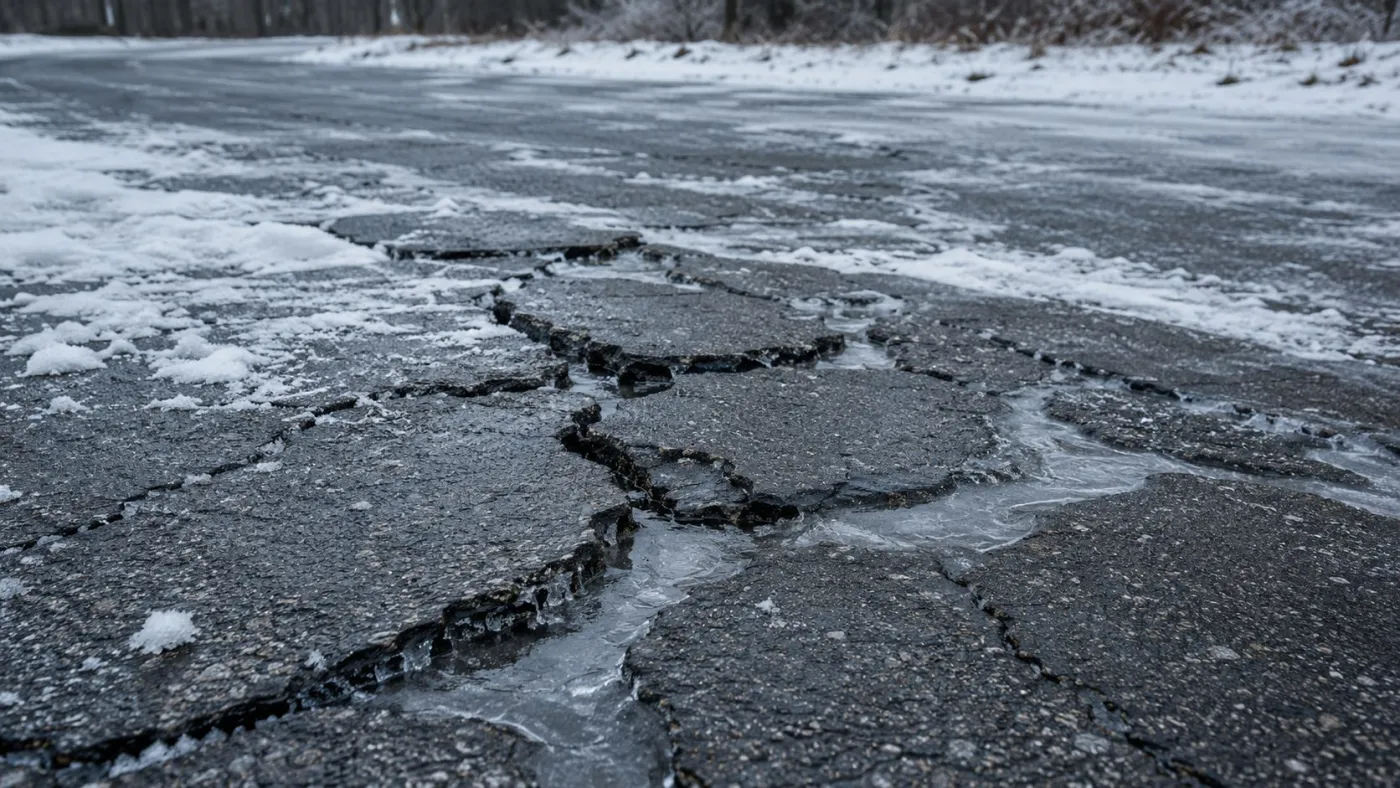
A Triad or Southern Virginia winter doesn't look like it should be hard on driveways — mild temperatures, modest snowfall, a few cold snaps. But our winters do more damage to asphalt than a New England winter does, for one reason: we get more freeze-thaw cycles. Each one is small. Combined, they're brutal. Here's how to defend against them.
Why Carolina-Virginia winters are sneaky-tough on asphalt
The Piedmont and Southern Virginia sit in a meteorological zone where:
- Daytime highs are often above freezing
- Nighttime lows are often below freezing
- That pattern repeats 30–50+ times per winter
Compare that to northern Minnesota, where the ground freezes solid in December and stays frozen until March. Far north, you get one big freeze. Here, you get 50 small ones, and every cycle is another opportunity for water to expand inside a crack and pry it wider.
Add to that the relatively wet winters we have — the freeze events tend to happen when there's plenty of moisture in the system — and the math is unforgiving.
The four threats
1. Freeze-thaw cycling
Water in cracks expands when it freezes, then melts and lets more water in. Repeat. See our deep dive on freeze-thaw damage.
2. De-icer chemicals
Rock salt (sodium chloride) is the most common winter de-icer and the most destructive to asphalt. It accelerates surface oxidation and the brine that runs off attacks the binder. Salt is also corrosive to vehicles and harmful to plants and groundwater.
3. Snow plow damage
If you use a plow service, the wrong blade or aggressive operation can scrape and gouge the surface. Even careful plowing can dislodge sealcoat and roughen the surface texture over time.
4. Heavy ice and snow load
While the load itself isn't usually a problem, snow that accumulates and sits on the surface for days at a time saturates the underlying pavement with meltwater. That meltwater is what fuels the freeze-thaw damage.
The fall prep checklist (do this in October)
- Walk the driveway and document every visible crack. Fill them all with cold-pour crack filler if they're 1/8" to 1/2". Anything wider, schedule professional repair before winter.
- Make sure drainage works. Any spot that pools water for more than a couple of hours after rain is a freeze-thaw factory waiting for winter. Fix the drainage now.
- Sealcoat if due. A fresh seal heading into winter dramatically reduces the surface area where water can enter. If you're past due, October is your last good window.
- Clean the surface. Remove leaves, sticks, and accumulated debris — these hold moisture against the surface.
- Buy the right de-icer. Don't wait until the first storm to figure out what to use. Stock magnesium chloride or calcium chloride pellets, plus sand for traction.
The winter operating rules
Use the right shovel
Plastic, not metal. Metal blades scratch the surface, especially on sealcoated driveways. The scratches are minor individually but they accumulate over years.
Salt smarter
- Pre-treat before storms when possible. Applying de-icer on a dry surface before snow falls keeps ice from bonding to the pavement.
- Use the minimum effective amount. More salt isn't more effective once you've broken the ice bond.
- Switch from rock salt to magnesium or calcium chloride. Slightly more expensive, dramatically less destructive to pavement and vegetation.
- Use sand for traction without melting. If you don't actually need to melt the ice (you just need not to slip), plain sand works.
Shovel before plowing
For light snowfalls (under 4–5 inches), shovel rather than plow. Plow operators are working fast and can't see surface conditions well — shoveling avoids gouges entirely.
If you use a plow service
Ask about blade material. Rubber or plastic-edge blades are gentler than steel. Also ask where the operator plans to push the snow — repeated piling in the same corner creates a freeze-thaw hotspot.
Clear, don't accumulate
Clearing snow within 24 hours when practical limits the time meltwater spends in contact with the surface. Accumulated snow that gets compacted by car traffic turns to ice that's brutally hard to remove without damaging the surface.
The spring inspection (March)
This is the most important driveway walk of the year. After 30–50 freeze-thaw cycles and a winter of de-icer exposure, the driveway will have changes. Look for:
- New cracks — fill them with cold-pour crack filler ASAP. The longer they sit open, the wider they get.
- Existing cracks that have visibly widened — same fix, but consider whether wider cracks now need routing.
- Visible aggregate (small stones showing through) — surface raveling. Plan a sealcoat for late spring or early summer.
- New low spots — winter ground heave can create depressions. Mark them and watch how they hold water through spring rains.
- Edge crumbling — eroded soil along the driveway edge plus winter water saturation is the most common cause. Re-edge and re-grade as needed.
- Surface scaling or flaking — usually from de-icer. Sealcoating in late spring helps; if scaling is severe, you may have penetrated damage that needs spot repair.
When winter damage is serious enough to call
Most winter damage is the kind a homeowner can handle with a tube of crack filler. The signs that you need professional help:
- Alligator cracking appearing where there wasn't any in fall
- New potholes
- Areas that feel softer than the surrounding driveway
- Standing water that wasn't there before
- Visible separation between the asphalt and any concrete edges or apron
These point to deeper damage — usually water that got into the base over winter and softened the structural section. The repair cost goes up the longer it sits.
The bottom line
Carolina-Virginia winters demand active driveway management, not because they're severe but because they're sneaky. Fall prep, smart winter operation, spring inspection — that's the cycle. Skip it for one winter and you might be fine. Skip it for five and your driveway is aging twice as fast as your neighbor's.