
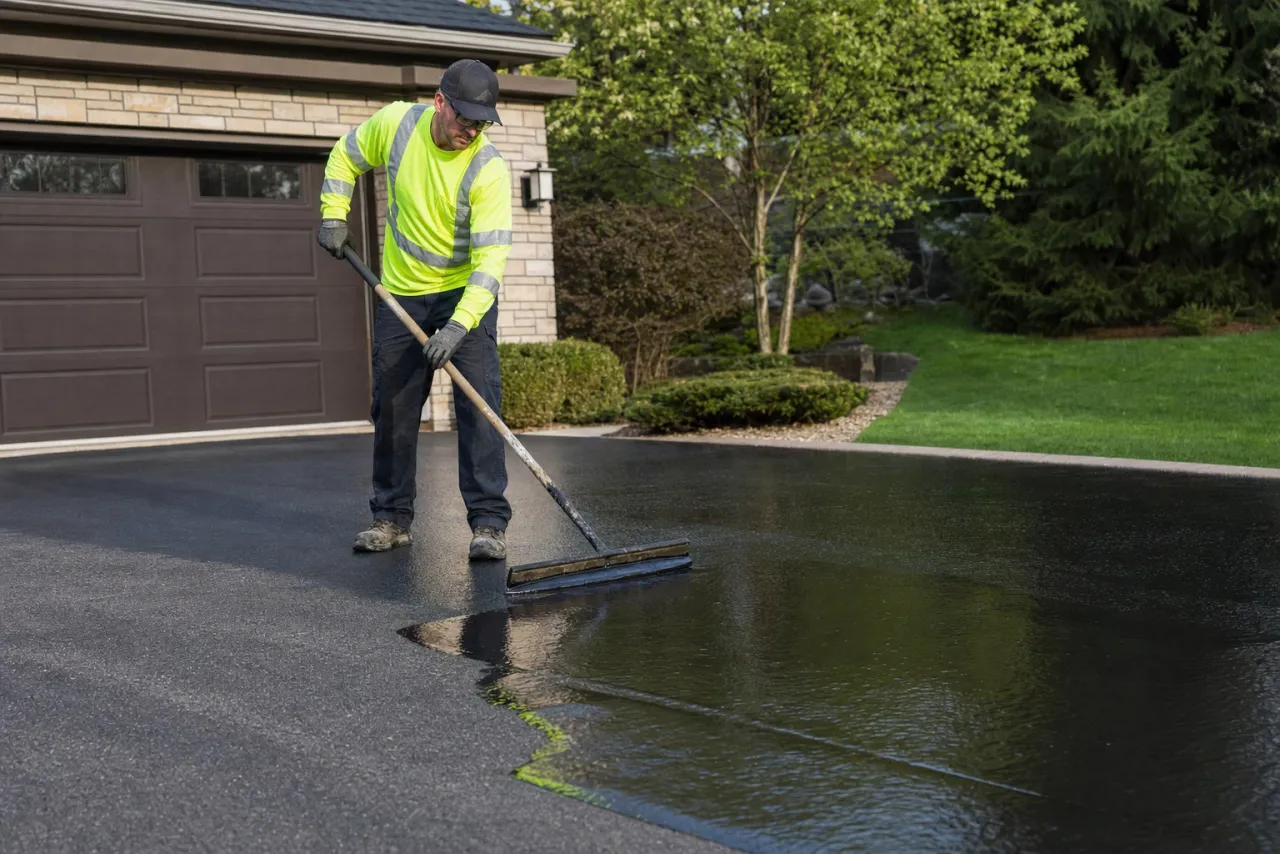
A $300–500 sealcoat can add 5–10 years to a driveway. Skip sealcoating for too long and you're staring down a $5,000+ resurface. It's the single highest-ROI thing you can do for asphalt — but only if it's done at the right time, the right way.
What sealcoating actually does
Sealcoat is a thin protective layer applied over asphalt to do three things:
- Block UV. Sun is the #1 driver of asphalt aging. UV oxidizes the binder, making the surface brittle.
- Repel water. Water in cracks is what turns small problems into big ones via freeze-thaw.
- Resist oil, gas, and chemicals. These attack the binder and soften the surface.
What sealcoating does not do: structural repair. It's not glue, not crack-fill, and not a substitute for fixing a deteriorating base. A common mistake is sealcoating over alligator cracks, which traps water and accelerates the failure underneath.
When to sealcoat — and when to wait
First sealcoat: 6–12 months after a new pour
Brand-new asphalt is busy off-gassing volatile compounds. Sealing too early traps them and creates a soft, unstable surface. Wait through one full summer.
Ongoing: every 2–3 years
The sweet spot is when the surface starts to look gray rather than black, but before you see visible aggregate (the small rocks in the asphalt). If you can see the texture clearly from 10 feet away, you're already overdue.
When to skip it
- Active alligator cracking → fix the structural problem first.
- Less than a year old → wait.
- Surface is delaminating or potholing → seal won't help; you need patching or resurfacing.
- Rain in forecast within 24 hours of application → reschedule.
The four-step sealcoating process
- Clean. Pressure wash, blow off debris, remove standing water. Oil spots get a primer/degreaser. This step is what most DIY jobs get wrong.
- Repair. Crack-fill anything wider than 1/8". Patch any holes. Sealcoat is a finish coat — it doesn't fix what's underneath.
- Apply. Two thin coats are better than one thick coat. Done with squeegee for the edges and a spray rig for the field.
- Dry. Keep traffic off for 24 hours (foot) and 48 hours (vehicles). Cars on uncured sealcoat leave tire tracks.
How weather affects timing
Sealcoating works best between 50°F and 85°F with low humidity and no rain forecast. In the Carolinas and Virginia, that's roughly:
- April–early June: ideal, before peak summer heat.
- September–early October: ideal, after the heat breaks.
- July–August: doable on overcast days, but high heat speeds drying so much that you can get streak marks.
- November–March: too cold for proper cure; risk of failure.
What "good" sealcoating looks like
A few signs the work was done right:
- Even, uniform black color — no streaks, no thin spots, no skipped areas.
- Clean cut lines along garage doors, sidewalks, grass edges.
- Cracks were filled before coating, not just covered over.
- Oil spots got primer first.
- The job dries to a satin finish, not gloss. (Glossy sealcoat usually means it was applied too thick.)
DIY vs. hiring it out
You can buy sealcoat at any home improvement store and apply it with a squeegee. Most homeowners regret it. The product sold retail is thinner than commercial grade, application is harder than it looks, and the time savings of pro spray equipment is significant. The materials cost difference between DIY and a pro job is smaller than people expect — most of what you're paying for is labor, equipment, and the right materials.
If you do go DIY: clean obsessively, fill cracks first, apply on a warm dry day, and use two thin coats.
The bottom line
Sealcoat is a small, regular expense that pushes major repaving years down the road. The math always works out. The question isn't whether to seal — it's making sure you do it at the right time and the work gets done properly.