
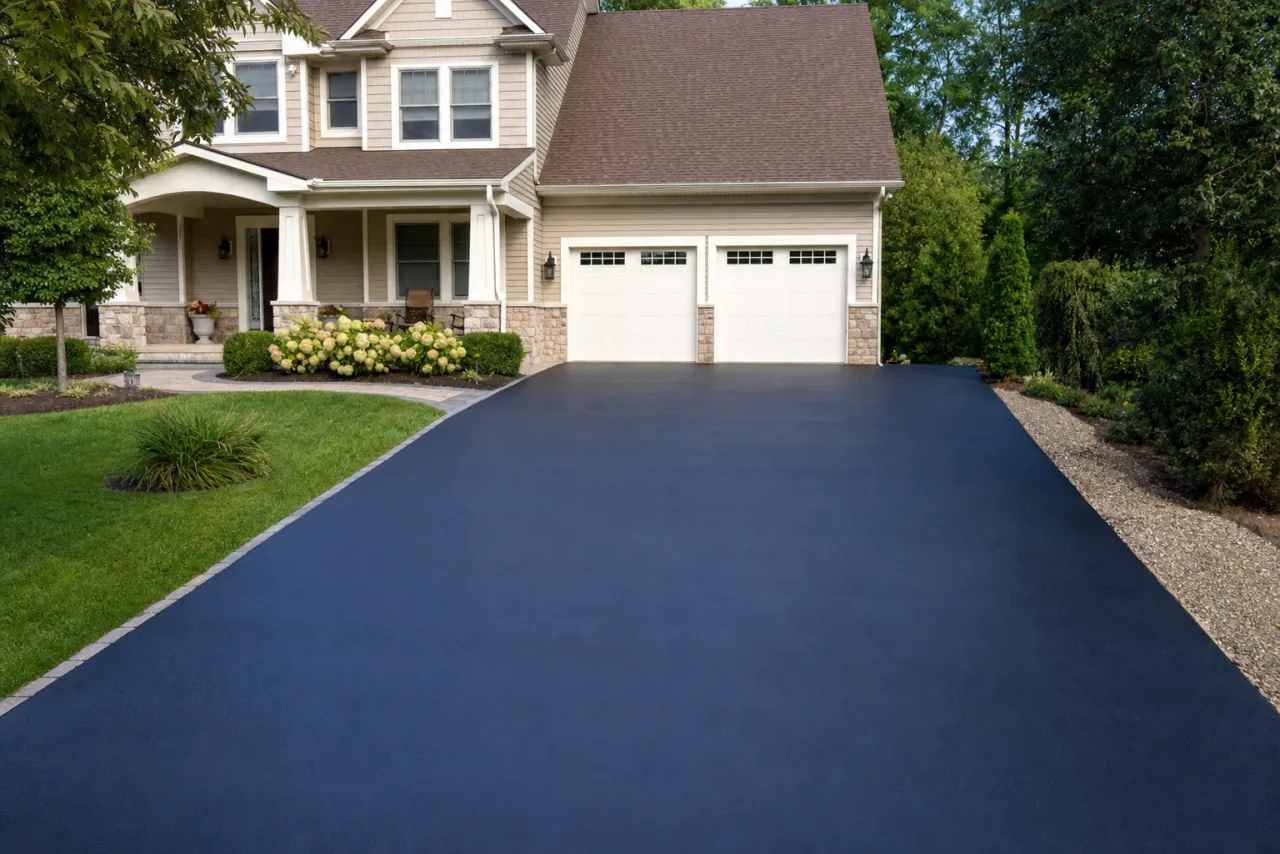
Asphalt looks finished the second the roller leaves. It isn't. There's an important difference between asphalt that has hardened enough to walk on and asphalt that has cured enough to handle daily life — and getting it wrong is one of the most common ways homeowners damage a new driveway.
Hardening vs. curing
Fresh asphalt comes out of the truck around 300°F. Once it's compacted and starts cooling, it stiffens up within a few hours. That's hardening. But the binder — the oily glue that holds the rock together — keeps evolving for months as it sheds volatile compounds and oxidizes into its final, stable form. That slow chemical process is curing.
Hardened asphalt feels solid. Cured asphalt is durable enough to resist scuffs, indentations, and edge crumbling. The gap between the two is where most accidental damage happens.
The three windows you need to know
0–24 hours: stay off completely
For the first day, even foot traffic can leave marks. Pets, kids on bikes, lawn mowers, garden hoses dragged across the surface — all of it leaves impressions. The asphalt is firm enough to walk on, but it doesn't yet "spring back."
24–72 hours: vehicles OK, with rules
After about 48 hours in mild weather (longer in heat), you can drive on the new surface. Keep it gentle:
- No sharp turns from a stop. Power steering against a stationary tire is the #1 cause of "turn marks" in fresh asphalt.
- No heavy vehicles. Moving trucks, deliveries, dumpsters — postpone for two weeks if possible.
- Don't park in the same spot every day. Same tire imprint = a permanent low spot.
6–12 months: full cure
Through the first summer, your driveway will be a little softer than its final state. Avoid kickstands, jack stands, trailer tongues, and high-heeled shoes — concentrated point loads can dimple soft asphalt. This sounds extreme; it isn't. It happens constantly.
What hot weather does to the cure window
In a Carolina summer with surface temps over 130°F, asphalt stays plastic longer. A driveway poured in July is more vulnerable in August than one poured in October. If you pave in peak summer, treat the first two weeks like the first 48 hours for anything heavier than a passenger vehicle.
The small habits that protect a young driveway
Through the first year, three habits prevent most cure-period damage:
- Roll, don't pivot. When you pull in, finish your turn while moving forward.
- Rotate where you park. Vary the parking spot by a few feet each day for the first month.
- Don't sealcoat right away. Sealcoating in the first 6–12 months traps uncured volatiles. Wait through one full summer before applying the first sealcoat.
"My new asphalt has a soft spot — is something wrong?"
Not necessarily. Asphalt cures unevenly, especially around hand-laid edges and joints where compaction is different from the main field. Slightly softer spots usually firm up within a few weeks. If you see something that looks more like a depression than a soft area — water pooling, an obvious dip — that's worth a call.
The bottom line
Treat new asphalt like a new floor finish: usable quickly, but fragile for a while. Twenty-four hours off it, three days of careful driving, a year of awareness. Do that and the surface that took a day to lay will last 20–30 years.