
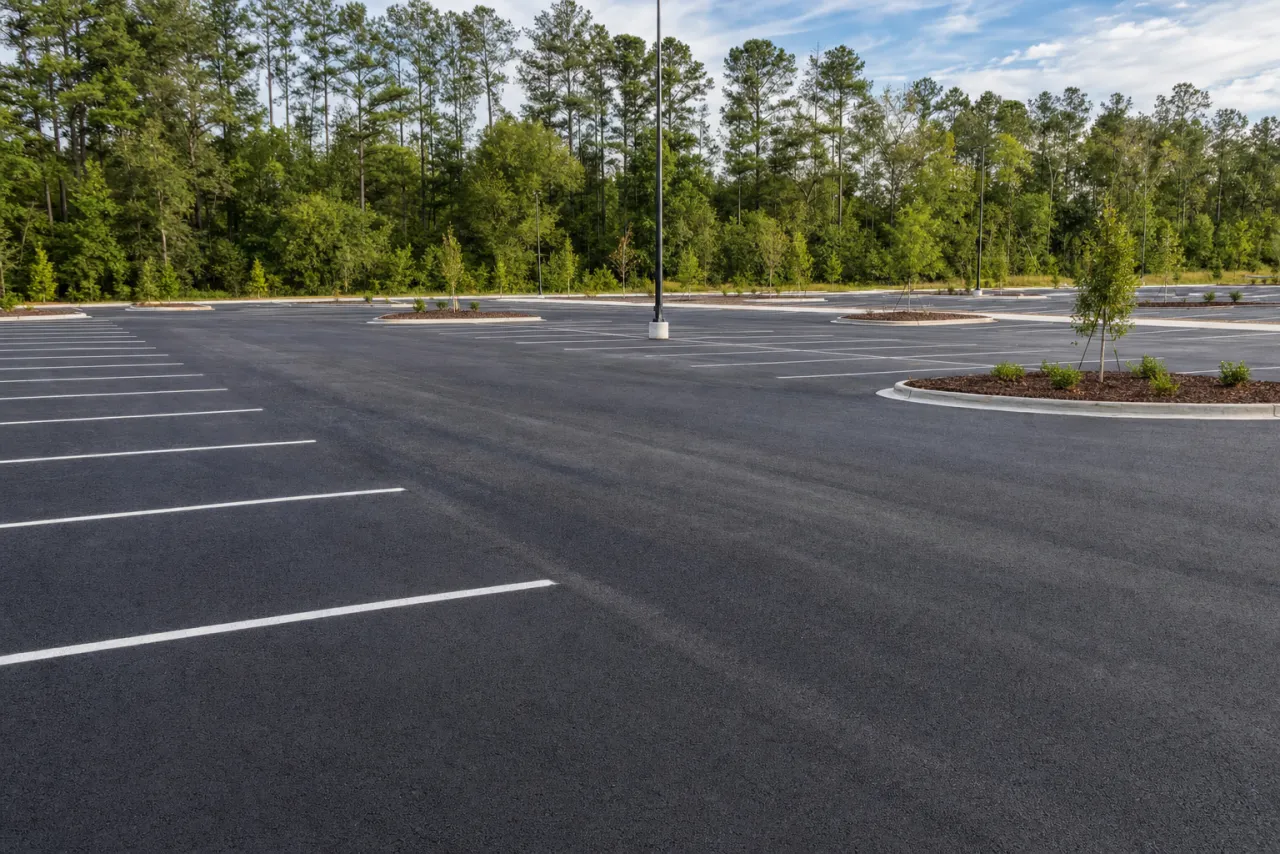
A freshly paved driveway can look surprisingly uneven the day it's installed. Streaks. Patches that seem slightly lighter or darker. Roller marks where the equipment turned. Most of this is cosmetic and disappears within a few months. Some of it is permanent. Here's how to tell which is which.
The cosmetic stuff (don't worry about it)
Roller marks
A heavy steel roller leaves slight horizontal banding when it changes direction. These show up as faint shadows running across the surface. They smooth out under traffic and weathering within a few weeks.
Hand-laid edges vs. machine-laid field
The main body of your driveway is laid by a paver machine in continuous passes. The edges, transitions to garage doors, and tight corners are usually finished by hand with rakes and lutes. Hand-work has a slightly different texture and sometimes a slightly different color shade than the machine field. This is normal and not a defect — it's just the difference between mechanical and manual placement.
Aggregate segregation (small dark/light spots)
Asphalt is a mix of rocks (aggregate) and binder. Sometimes the mix gets minor segregation in the truck — heavier rocks settling. The result on the ground is occasional spots where you see slightly coarser texture. As the surface cures and gets light traffic, these visually blend in.
Shiny vs. dull patches
Areas that took more roller passes or sat hotter for longer can come out shinier. Shiny doesn't mean better, and the contrast levels out as oxidation evens the surface tone over the first year.
The "wait and see" stuff
Hairline cracks in the first week
If you see thin, irregular shrinkage cracks within the first 1–2 weeks, this is common, especially in hot weather where the surface cooled and contracted slightly faster than the layer underneath. As long as they're hairline and stable, the next sealcoat handles them.
"Bird baths" — small low spots that hold water briefly
Most driveways have one or two spots where water pools after a rain. If the puddle dries within an hour or two, it's normal — every paved surface has some variation. If a puddle persists for 24+ hours, that's a real issue (see below).
Tar bleed on hot days
In the first summer, asphalt can occasionally show shiny tar coming to the surface on extreme heat days. The binder is still off-gassing, and a little surface migration is normal. It dissipates as the season ends.
The actual problems (call your contractor)
A depression that doesn't drain
If water sits in one spot for more than 24 hours, the surface has a real low — and water sitting on asphalt is what causes most premature failure. Contractors should fix obvious bird baths during install; if one shows up days later as the surface settles, it's worth a callback.
Edges crumbling within weeks
New asphalt edges are vulnerable for the first few months, but they shouldn't be crumbling. If a chunk of the edge breaks off when you drive over it, the edge wasn't compacted properly or was placed too thin.
Visible aggregate (raveling) within the first year
You shouldn't see the rocks in your new asphalt. The surface should be tight and uniform. If small stones are coming loose under foot traffic in the first months, the mix wasn't well bonded or compaction was inadequate.
A wide crack that opens, closes, or grows
Hairline shrinkage cracks are normal. A crack you can drop a pencil into within the first year is not. That's a sign of base movement or structural failure — definitely a callback.
Soft spots that don't firm up
Asphalt softens in summer heat, then firms when it cools. If you have a spot that stays soft long after the surrounding driveway has cured — especially one that you can dent with a thumbnail — there's likely a compaction or thickness issue at that location.
What a good contractor will do about it
Any reputable paving company will come out for a follow-up walk-through if you have concerns. Cosmetic items get explained. Actual defects get fixed at no charge under workmanship warranty. The difference between a cosmetic complaint and a warranty claim is usually obvious once a professional sees it in person — don't be afraid to ask.
The bottom line
New asphalt is a craft product, not a factory finish. Some non-uniformity is part of how it's made and disappears in the first season. Real defects don't disappear — they get worse. If you're unsure, take a photo and call. Five minutes on the phone almost always settles it.