
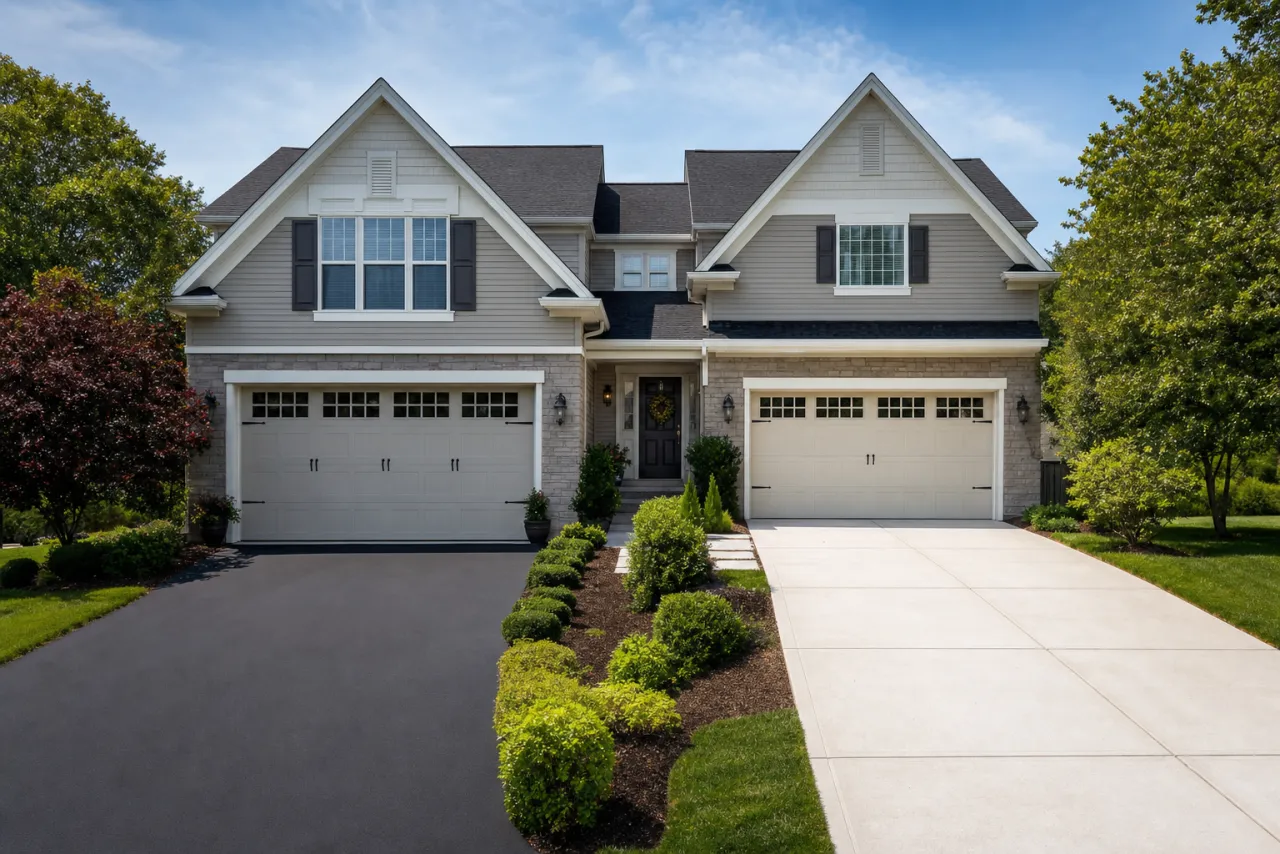
"Should I go with asphalt or concrete?" is the most common question we get on a residential walk-through. The honest answer is: it depends on what you value, how long you plan to stay in the house, and what your driveway has to deal with. Here's how to think it through.
Lifespan
Asphalt: 20–30 years with regular sealcoating and crack maintenance. Without that maintenance, expect closer to 15.
Concrete: 30–50 years, sometimes more, with much less ongoing maintenance.
Concrete wins on raw longevity. But there's a catch: when concrete fails, the failure tends to be permanent and ugly (cracks, spalling, sunken slabs). Asphalt failures are usually fixable.
Upfront cost
Concrete typically costs significantly more to install than asphalt — often 50–80% more for the same square footage. We don't quote specific numbers here because site conditions vary, but plan on concrete being the bigger initial check.
That said, concrete's longer life sometimes evens out the math over a 30-year horizon — especially if you stay in your house that long.
Climate fit (NC and VA specifically)
The Piedmont gets 30–50 freeze-thaw cycles a winter and clay soils that expand and shrink with moisture. Both surfaces handle this, but differently:
- Asphalt flexes. Small ground movements that would crack concrete just slightly distort asphalt — which is one reason it dominates the regional market.
- Concrete is rigid. Done right (with proper sub-base prep, control joints, and a good mix), it lasts decades. Done badly, the first cold snap cracks it.
For most Carolina and Virginia driveways on red clay, asphalt is the lower-risk choice.
Maintenance
Asphalt needs sealcoating every 2–3 years and crack-fill on an as-needed basis. Plan on a half-day every other year for upkeep.
Concrete needs almost nothing for years, then occasionally needs joint resealing or surface cleaning. Sealing concrete is optional but helps in oil-prone areas.
Repairability
This is asphalt's biggest practical advantage.
- A damaged section of asphalt can be saw-cut, removed, and replaced — and within a year the patch is hard to spot, especially after the next sealcoat.
- Concrete repairs are almost always visible. Patched concrete looks patched.
If you have heavy delivery traffic, RVs, or anything that periodically tears up your driveway, asphalt is more forgiving.
Looks
Asphalt is jet-black for the first few years, then weathers to a charcoal gray. Concrete is light gray and stays that way. Some homeowners prefer the contrast of dark asphalt against the house; others like the brightness concrete reflects at night.
Concrete can be stamped, stained, or colored — opening up design options asphalt doesn't have. Asphalt can have a decorative brick or paver border, which is a more affordable way to dress it up.
Stains and chemicals
Concrete stains more visibly. Oil drips show up dark on light concrete and are hard to fully remove.
Asphalt hides oil better in the short term but is more vulnerable to long-term oil contamination — gasoline, motor oil, and some solvents can soften the binder.
If you regularly work on cars in your driveway, both surfaces have downsides. Park a drip pan.
The quick decision matrix
- Stay in house long-term, willing to pay more upfront, want low maintenance → concrete
- Mid-term home, value lower upfront cost, comfortable with light maintenance → asphalt
- Steep grade, freeze-thaw exposure, expansive soils → asphalt
- Heavy oil/grease exposure, perfect look matters → concrete
- Decorative finish (stamped, colored, patterns) → concrete
- Easy to repair after delivery damage → asphalt
The bottom line
Most Triad and Southern Virginia homeowners end up with asphalt for sound reasons: it costs less up front, handles the local soil and climate well, and stays repairable for decades. Concrete is a great choice in the right situation — just go into it knowing you're paying more for longevity in exchange for less repair flexibility.