
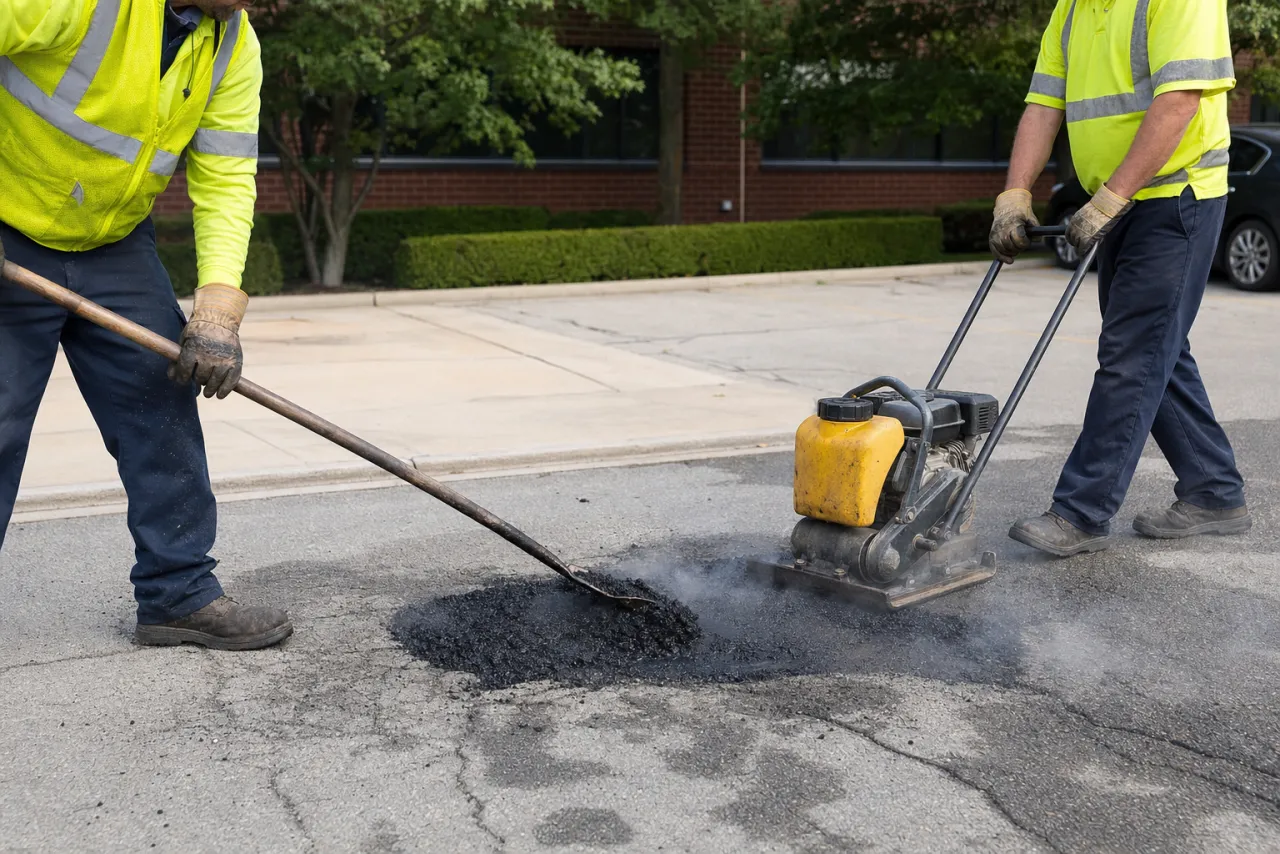
When somebody says "patch the asphalt," they could mean four different things, each with a different cost, a different lifespan, and a different right time to use it. Understanding which patch you need (and which you don't) saves money and avoids the trap of paying for patches that don't last.
The four common patch types
1. Surface patch (skin patch)
What it is: A thin overlay of asphalt placed over a damaged surface area without removing the existing pavement. Typically 1/2" to 1" thick.
When to use it: Shallow, cosmetic surface issues — minor raveling, very shallow potholes, small areas of surface deterioration. Often used to smooth out birdbaths.
Lifespan: 2–5 years if the underlying problem was cosmetic; less if there's any real damage under the patch.
Caveat: Skin patches over structural problems fail fast. Don't use this when the issue is anything more than surface-deep.
2. Saw-cut patch (full-depth)
What it is: The damaged area is saw-cut to a clean rectangle, the failed asphalt is removed, the base is repaired or replaced as needed, and fresh asphalt is placed in the cavity.
When to use it: Deeper potholes, areas of alligator cracking, utility cuts, anything with base failure.
Lifespan: 10+ years on residential properties if the repair was done well and the rest of the pavement is sound.
Why it works: By cutting back to sound asphalt and rebuilding from the base up, you're addressing the root cause, not just the visible symptom. This is the gold standard for serious patching.
3. Throw-and-roll (emergency cold patch)
What it is: Cold-mix asphalt shoveled into a pothole and compacted with hand tools or vehicle traffic. The mix used is typically a cold patch product that works without heating.
When to use it: Temporary, emergency repairs — a developing pothole that needs to be made safe before a permanent fix can be scheduled. Winter conditions when hot mix isn't available.
Lifespan: Weeks to months. This is not a permanent solution.
Caveat: Cold patch is bandage work. It buys time. Plan a real patch within a few months.
4. Infrared patching
What it is: An infrared heater is used to soften the existing damaged asphalt in place. The hot, plasticized asphalt is then raked, additional fresh mix is added, and the whole area is re-compacted into a seamless surface.
When to use it: Smaller surface defects where you want a near-seamless repair — utility cuts, isolated raveling, joint repair. The advantage over a saw-cut patch is that there's no visible cut line.
Lifespan: Comparable to saw-cut patch if used on the right kind of defect (5–10+ years).
Caveat: Doesn't work on deep structural failure. The base has to be sound.
How to know which patch you need
The decision usually comes down to three questions:
1. Is the damage surface-only or full-depth?
Surface-only (under 1" deep, cosmetic) → skin patch or infrared.
Full-depth (pothole, alligator cracking) → saw-cut.
2. Is the base sound?
Sound base → any patch type works.
Compromised base → saw-cut is the only option that addresses the actual problem.
3. Does it need to be done today?
Yes → cold patch (temporary), schedule a real fix soon.
No → schedule a proper patch when temperatures are right.
Common patching scenarios
"There's a pothole in my driveway"
If it's shallow (under 2 inches) and isolated: saw-cut patch, 1–2 hour job.
If it's deeper or has soft material around it: saw-cut, bigger cavity, base rebuilt.
If you have three potholes within a 10-foot stretch: you don't have a pothole problem — you have a base problem. Patching each hole separately will lead to patching them again next year.
"The utility company dug up my driveway and the patch they left looks bad"
Common. Utility patches are temporary by design — they're sized to restore the road, not match your driveway. Most utility companies will pay for a proper saw-cut patch if you ask, or you can have it redone properly and bill them.
"I have a low spot that collects water"
If the depression is shallow and stable, a skin patch can level it. If it's deep or growing, you likely have a settlement problem that needs the full saw-cut treatment plus base repair.
"My commercial lot has dozens of small damaged spots"
At a certain scale, individual patching stops making economic sense and an overlay or mill-and-fill is cheaper. The break-even point varies, but if more than 10–15% of the lot needs patching, evaluate the resurfacing option seriously.
What a good patch looks like
A few things to look for on completed patch work:
- Clean edges. The cut should be straight, not jagged. Sloppy edges indicate the contractor didn't bother saw-cutting properly.
- Flush with surrounding pavement. A patch that's higher or lower than the surrounding surface creates a bump or a bowl that catches water.
- Sealed joints. The seam between patch and existing pavement should be sealed with crack filler or a rubberized joint sealant. Otherwise that seam will be the first place water enters.
- Compaction. A properly compacted patch feels solid under foot — not springy. Springy means the contractor didn't run a roller properly.
The bottom line
"Patching" sounds simple, and small patches really are. The trick is making sure you're paying for the right kind of patch — and that you're not patching when you should be doing something bigger.