
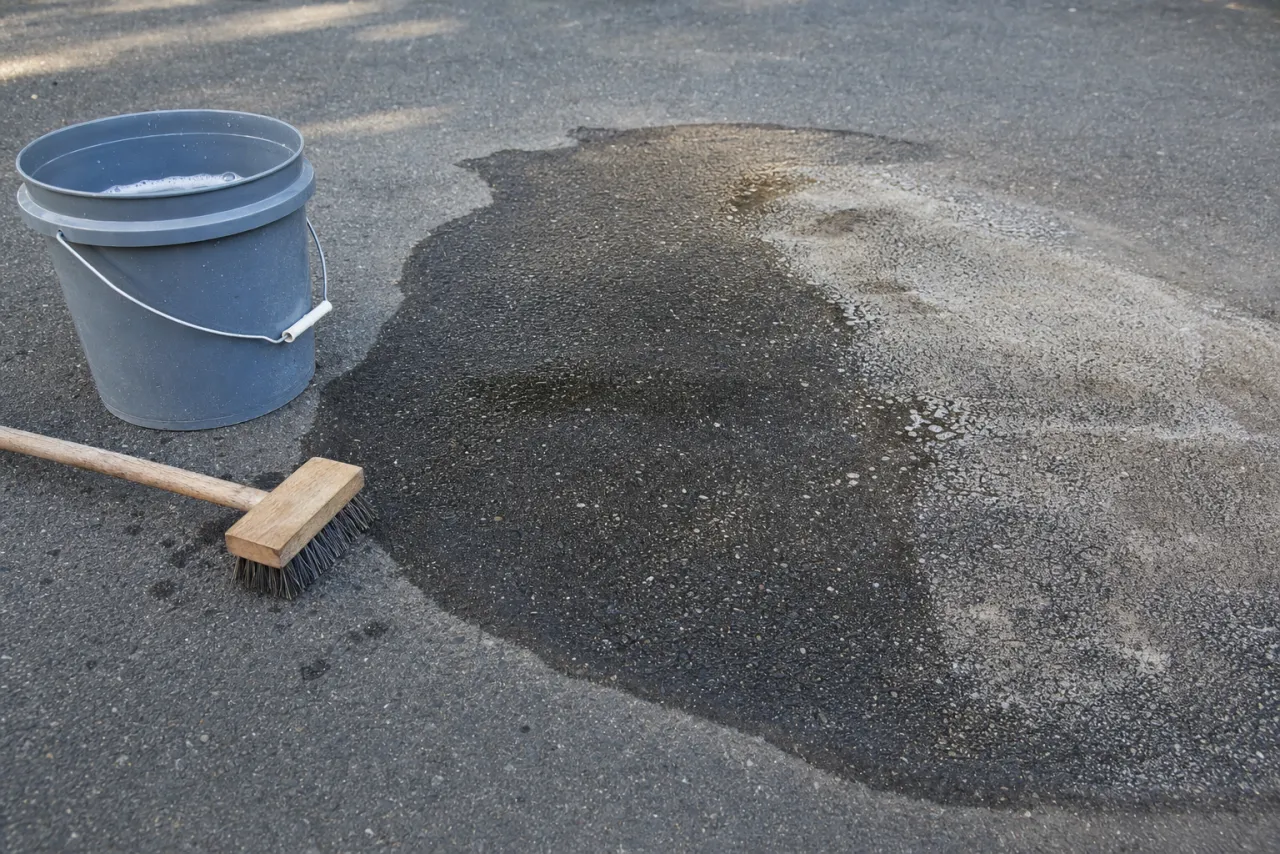
Oil and gas on asphalt aren't just cosmetic problems. Petroleum-based fluids slowly dissolve the binder that holds the rock together — meaning every drip is a small assault on the structural integrity of your driveway. Catching them early matters. Here's how to handle stains at different stages.
Fresh spills (under an hour)
The single best moment to fix an oil leak is right after it happens. Standard process:
- Absorb. Pour a generous layer of kitty litter (the cheap clay kind), sawdust, or cornstarch directly over the spill. Wait 20–30 minutes — longer for bigger spills.
- Sweep up. Use a stiff broom and a dustpan. Don't grind the absorbed material into the surface.
- Wash. Hot soapy water with a strong dish soap. Scrub with a stiff brush. Rinse.
If you catch it within an hour, most fresh spills come up completely with this method. The trick is acting fast — every minute the oil sits, more penetrates into the asphalt.
Set-in stains (hours to days old)
For stains that have had time to soak in, you need something stronger:
Method 1: Degreaser
- Apply a heavy-duty degreaser. Krud Kutter, Oil Eater, and Simple Green Pro HD all work. So does plain dish soap (Dawn especially) cut with hot water.
- Scrub vigorously with a stiff bristle brush. Don't use a wire brush — it scrapes the surface.
- Let it sit 10–15 minutes.
- Rinse with hot water, pressure wash if you have one.
- Repeat if needed. Stubborn stains often take 2–3 cycles.
Method 2: Baking soda + dish soap paste
For lighter stains or as a follow-up:
- Mix baking soda with enough dish soap to form a thick paste.
- Apply over the stain. Let sit 30 minutes.
- Scrub with a stiff brush.
- Rinse.
Method 3: Commercial asphalt cleaner
Hardware stores sell asphalt-specific cleaners (often called "asphalt prep" because they're used before sealcoating). These are formulated to remove stains without damaging the binder. Follow the label.
What NOT to use
- Gasoline, lacquer thinner, paint thinner, mineral spirits. These dissolve asphalt as well as oil. You'll trade a stain for permanent surface damage.
- Bleach. Doesn't clean oil well and can lighten the surrounding asphalt color.
- Pressure washer at close range with the wrong tip. A 0° tip up close strips aggregate. Use a 25° or 40° tip and stand back at least 6–12 inches.
- Wire brushes. They tear up the surface texture.
Old stains (months to years)
Once an oil stain has been sitting for months, the petroleum has migrated deep into the asphalt. Surface cleaning will lighten it but won't fully remove it.
Realistic expectations:
- You can clean the surface and remove the visible residue.
- You probably cannot fully restore original color.
- The next sealcoat will hide the residual stain almost completely.
For deep stains, the practical path is: clean as well as you can, then plan a sealcoat. The combination usually makes the stain effectively invisible.
The penetrated stain problem
If an oil leak has been dripping in the same spot for years, you may have actual structural damage — the asphalt in that spot is softer than the rest because the binder has been compromised. Signs of penetrated damage:
- The surface feels softer or "rubbery" in the stained area
- You can push a screwdriver into the stained spot more easily than elsewhere
- Aggregate (the small rocks) comes loose when you scrub
- The stain shows back up after sealcoating
Penetrated stains can't be cleaned — they're physical damage to the pavement. The fix is to saw-cut that area, remove the contaminated asphalt, and patch with fresh material. It's a small repair on a single spot, but it's the right answer for severely damaged areas.
Preventing future stains
A few cheap habits make a huge difference:
- Park a drip pan under any vehicle that's known to leak. Cardboard boxes work in a pinch.
- Use a parking mat if you regularly park a vehicle in the same spot. Removable rubber mats catch drips and protect the asphalt below.
- Address leaks fast. A car leaking oil is a problem for both the car and the driveway. The repair pays for itself.
- Apply a fresh sealcoat every 2–3 years. Sealcoat creates a barrier that buys you time to clean up spills before they penetrate.
The bottom line
Fresh oil comes up easy. Old oil is hard. Penetrated oil isn't a cleaning problem — it's a repair problem. Stay on top of new spills and your driveway will look 10 years younger than it actually is.