
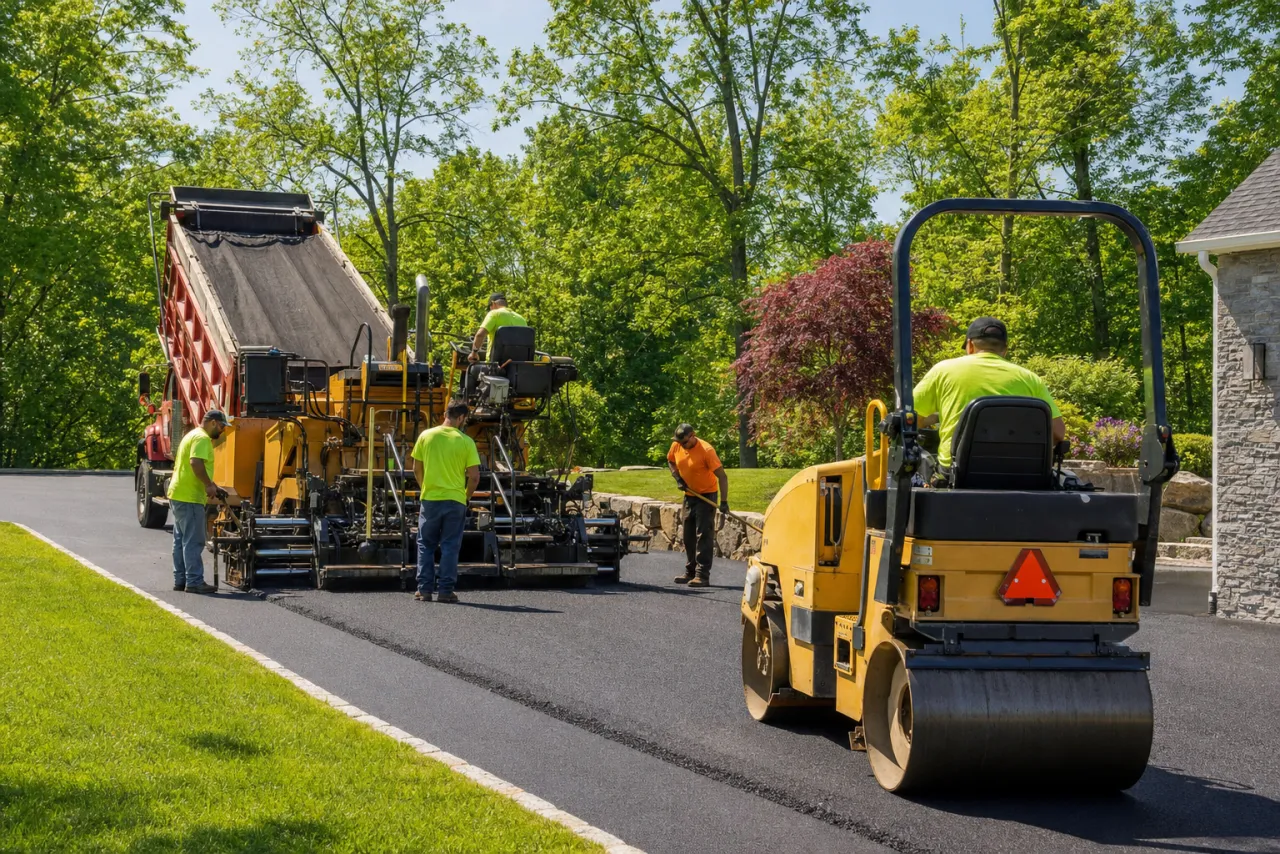
Asphalt has a comfort zone. Paved too cold, the mix won't compact properly and the surface fails early. Paved too hot, the mix stays soft for weeks and shows tire marks for years. In NC and VA, that comfort zone lines up with specific months — and the contractors who'll be paving during them book out fast.
The temperature rules
Hot-mix asphalt comes out of the truck around 300°F. Before the roller passes, it has to be compacted to design density. Once it cools below about 175°F, compaction effectively stops. That's why ground temperature matters as much as air temperature — a 50°F day with a 35°F base will pull heat out of the mix far too fast.
Industry rules of thumb:
- 50°F is the minimum air temperature for placement, and only with a sound base, the right mix, and an experienced crew.
- 70°F+ is the sweet spot — long working time, easy compaction, good results.
- Above 90°F works fine but extends the cure window. Hot-day asphalt stays soft longer.
- Below 50°F is doable in narrow windows but the risk of premature failure rises sharply.
NC and VA month-by-month
Spring (April–early June): the prime window
Most experienced paving contractors will tell you spring is the best time for residential paving. Days are warm, nights cool but not freezing, and the asphalt has time to cure properly before peak summer heat. Schedules fill quickly — companies are coming off the winter slowdown and demand is high.
Summer (June–August): doable, with caveats
Summer paving works but introduces a few issues. Surface temperatures over 130°F mean the asphalt stays plastic longer. New driveways are vulnerable to point loads (kickstands, trailer tongues, sharp turns) for 2–3 weeks instead of the usual 1. Crews also work earlier in the day to avoid the worst heat.
If you're paving in July or August, plan to keep heavy traffic off for two full weeks.
Fall (September–October): the second prime window
Cool nights, warm days, low humidity, stable weather — fall is what every paving contractor wishes summer was. The catch is the season is short: by mid-November in the Piedmont, ground temps start dropping fast.
Fall is especially good for sealcoating because cooler temperatures let the seal cure evenly without flash-drying.
Late fall (November): closing window
Possible early in the month, depending on weather. By Thanksgiving in most of NC and VA, paving season is effectively over for the year.
Winter (December–February): off-season
Cold ground, frost in the morning, freeze-thaw at night. Most contractors stop new paving for the winter. Emergency patch work continues year-round (with the right mix), but full driveway installation should wait.
Early spring (March): variable
Depends on the year. Most years March still has too many cold mornings. By the last week, paving can usually start again — but lead times are already filling up for April.
Booking lead times
This catches a lot of homeowners off guard. The best contractors book 4–8 weeks out during peak season and longer for larger commercial projects. If you decide in May that you want a driveway done before summer, you may be looking at a July install.
Practical timing:
- Want a spring install? Get on a schedule in January–February.
- Want fall? Book by July.
- Flexible on timing? Mid-summer and late-fall often have shorter lead times.
Other factors that affect timing
- Rain. Asphalt and standing water don't mix. Even 24 hours after rain, a soaked base means rescheduling.
- HOA approval. Some communities require advance design submission. Build a few weeks into your timeline for that if it applies.
- Driveway use during install. A typical residential paving day means no vehicle access for ~48 hours. Plan accordingly if you can't park on the street.
The bottom line
The "right" time to pave in NC and VA is mid-April through early June or mid-September through October. If you're flexible, book during those windows. If you're not flexible, summer is fine with the right cure precautions, and emergency mid-winter work is possible but should be limited to small repairs. What you don't want is to schedule a full new pour for January.