
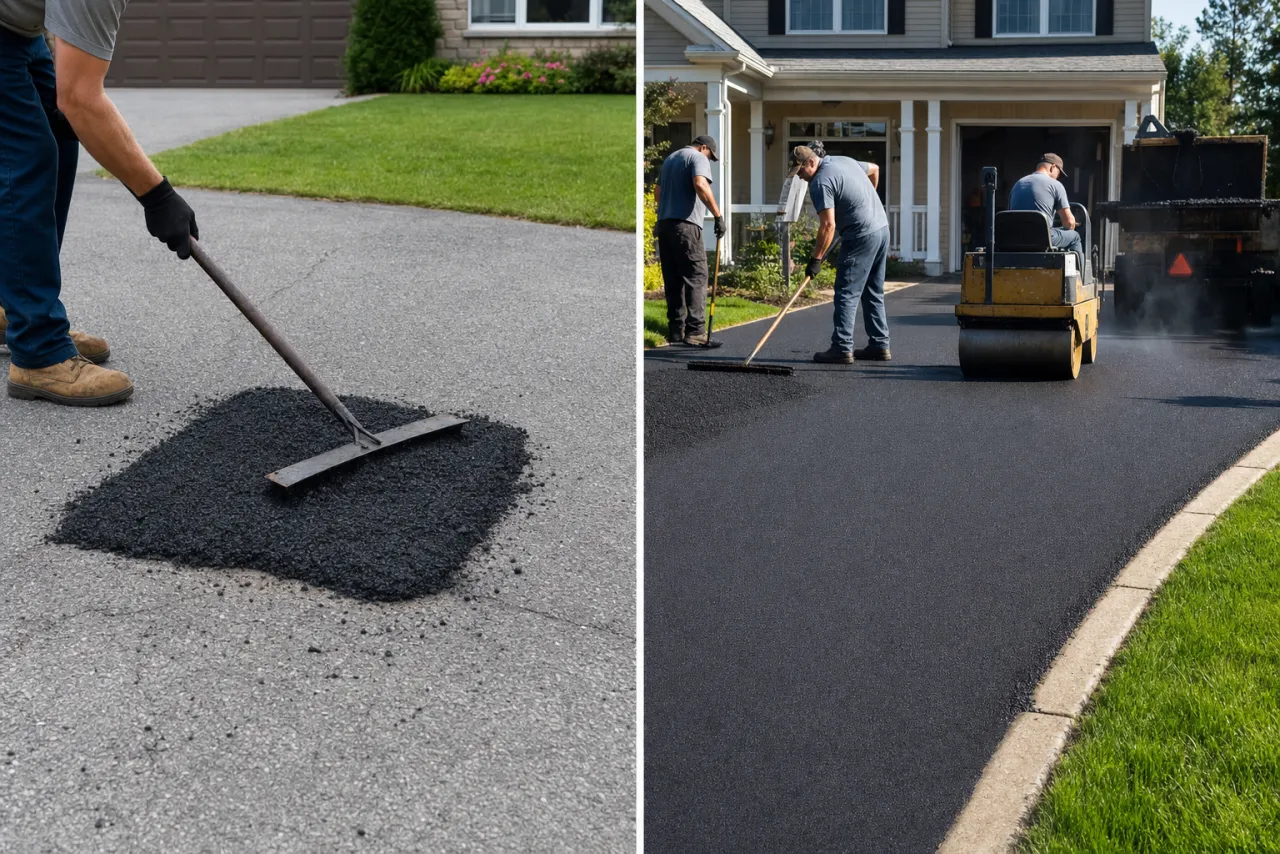
"Should I just patch this, or do I need a whole new driveway?" is the most common question we get on a residential walk-through. The right answer depends less on how bad the surface looks and more on what's happening underneath. Here's how to think it through.
Three options, not two
People usually frame the decision as repair vs. replace. There's actually a middle option that handles a lot of real-world cases:
- Repair: Crack-fill, patch potholes, seal the surface. Cheapest. Right for isolated, surface-only problems.
- Resurface (overlay): Mill or rough-up the existing surface, then place a new 1.5–2" wear layer over the top. Mid-range cost. Right when the base is sound but the surface is shot.
- Full replacement: Remove everything down to the sub-base, rebuild the structural section, lay new asphalt. Most expensive. Right when the base has failed or drainage problems require regrading.
The diagnostic question: is the base sound?
The single most important question is whether the structural layer under the asphalt is still doing its job. If the answer is yes, you can almost always avoid full replacement. If the answer is no, anything short of full replacement is a band-aid.
Signs the base is still sound:
- Cracks are surface-pattern only (shrinkage, transverse, longitudinal) — not alligator pattern
- No widespread settlement or low spots
- Drainage still works the way it was designed
- Potholes are isolated and don't recur after patching
Signs the base has failed:
- Alligator cracking across significant area (more than 25–30% of the surface)
- Recurring potholes — patched holes that fail again within a year or two
- Differential settlement (some spots are lower than they used to be)
- Standing water that doesn't drain because the slope has changed
- Soft spots that don't firm up
When repair is enough
If the problems are isolated and surface-level, repair is the right answer:
- A few cracks under 1/2" wide — crack-fill them
- One or two potholes in an otherwise sound surface — saw-cut, fill, and patch
- Faded color, minor raveling — sealcoat addresses it
- Edge crumbling on one section — re-edge that area
The mistake here is doing repair work when the underlying problem is bigger. If you patch a pothole that's caused by base failure, you'll be patching the same hole again in 18 months. Save the money and address the real issue.
When resurfacing is the right call
An overlay is the answer when the structural section is sound but the surface is past saving. Typical scenarios:
- 15–20 year old driveway/lot, base still solid, but the wear surface is heavily oxidized, raveled, or cracked throughout
- Multiple transverse/longitudinal cracks but no alligator pattern
- Surface texture has gotten rough enough that sealcoat won't stick well
- You want to extend the life of the existing pavement by 10–15 years for 30–50% less than full replacement
Resurfacing also lets you re-establish slope and crown if drainage has gotten lazy without doing it perfectly — small adjustments in the new wear layer can shift water flow without major regrading.
What resurfacing won't fix
If you have alligator cracking in spots, those areas need to be cut out and rebuilt before the overlay goes down. Otherwise the alligator pattern reflects up through the new surface within a year or two. This is called "reflective cracking" and it's the #1 failure mode of overlays that were done over compromised bases.
When full replacement is the right call
Some situations genuinely require starting over:
- Widespread alligator cracking — base has failed across most of the surface
- Drainage problems that can't be solved with surface work (settled areas, original grade was wrong)
- Soft, unstable base material (often discovered when patching reveals the sub-grade is wet or churned)
- You're changing the layout (expanding the driveway, adding a turnaround, changing access)
- 30+ year old surface with no maintenance history — even if it looks okay, the binder is so oxidized that any future work is throwing good money after bad
The cost-vs-life math
Without quoting specific numbers, the rough order of magnitude:
- Crack-fill and sealcoat: cheapest, adds 2–5 years
- Patch isolated areas: adds 3–8 years on the patched areas
- Overlay/resurface: significantly more, adds 10–15 years
- Full replacement: most expensive, starts a fresh 20–30 year clock
The mistake we see most often is people spending overlay money on repair-quality work — patching a structurally compromised lot when an overlay would have been the right call. The opposite mistake is spending replacement money on a lot that just needed an overlay. Get a written assessment from someone who'll explain what's actually wrong, not just quote you the most expensive option.
The bottom line
Match the fix to the actual problem. Surface issues get surface fixes. Base failures get structural fixes. The most expensive thing you can do is the wrong intervention — money spent that doesn't actually buy you the years you thought it would.