
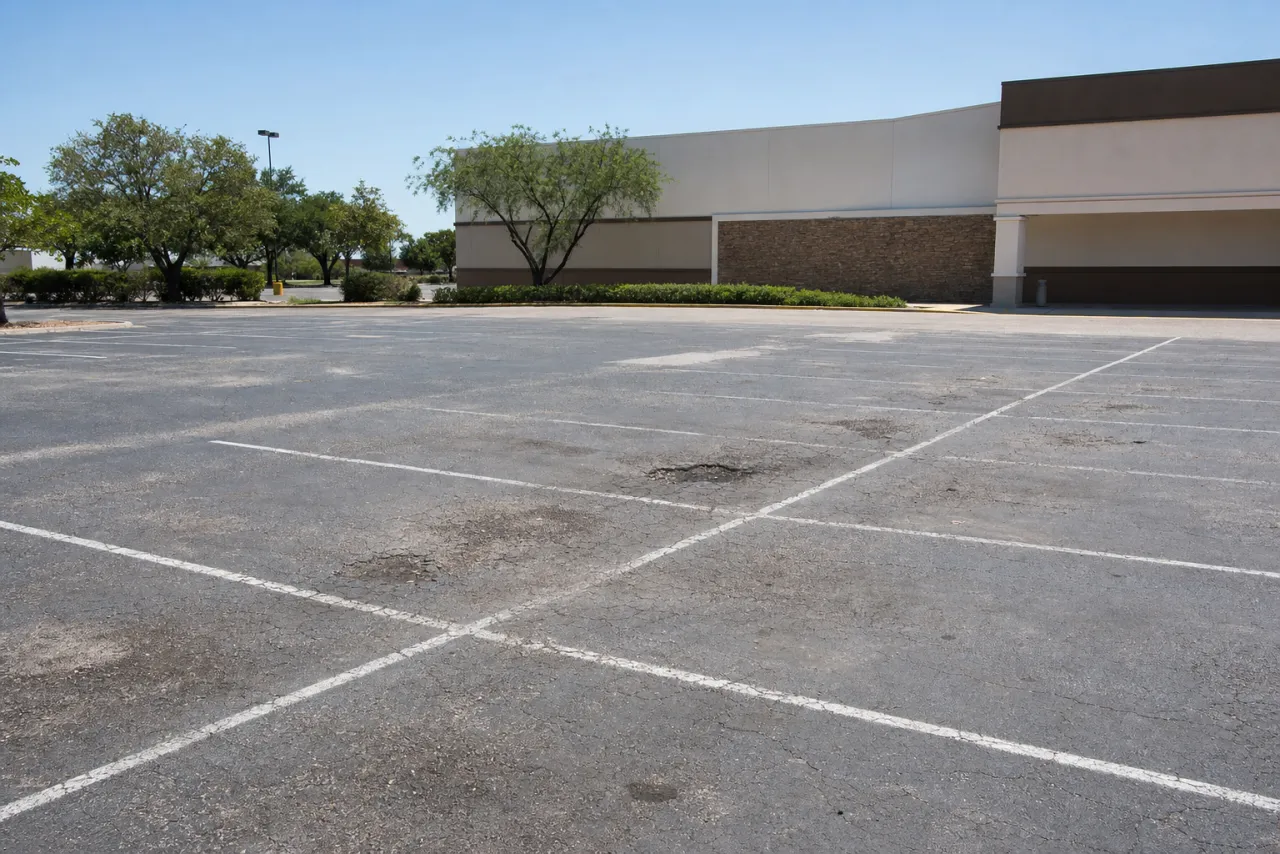
A parking lot doesn't fail overnight. It moves through stages — and the goal of maintenance is to slow the progression. But every lot eventually crosses a line where patching and sealing stops being enough. Here are the five signs to watch for, plus how to tell whether you need to resurface or rebuild.
1. Alligator cracking
Tight interconnected cracks resembling alligator skin tell you the base under the asphalt has failed in that area. Once you see alligator pattern, surface treatments do nothing useful — sealcoating just hides the symptom while water keeps entering the broken base underneath.
If alligator cracking is isolated to one or two areas (utility cuts, drains, low spots), you can saw-cut and rebuild just those sections. If it's spread across more than 25–30% of the lot, you're looking at a full overlay or replacement.
2. Potholes that come back
A pothole patched with hot mix should last years. If you've patched the same hole twice and it's failing a third time, the patching isn't the problem — the base under that spot is unstable. Repeated potholing in the same location means the structural section has lost its capacity to support traffic.
If multiple potholes are recurring across the lot, the structural section is failing more broadly. Time to move past surface repair.
3. Raveling and surface fines
Raveling is when the small aggregate (the rocks in the asphalt) starts coming loose from the binder. You'll see fine grit on the surface, especially after rain, and the texture of the lot gets rougher over time. Look for dark "shadow" lines where car tires have worn the surface.
Raveling means the binder has oxidized to the point where it's no longer holding the aggregate. Sealcoating slows it down if you catch it early. Once raveling is general across the lot, an overlay is the answer — sealcoat over a raveling surface tends to peel.
4. Drainage failure (standing water 24+ hours after rain)
Water that's still puddling a day after a storm is doing real damage. Asphalt is engineered to shed water; standing water saturates the pavement structure, softens the base, and accelerates every other failure mode.
Sometimes drainage failure is fixable with localized regrading or installing a channel drain. Often it's a sign that the lot has settled differentially, the original slope is no longer adequate, or storm infrastructure (catch basins, inlets) is undersized for current rainfall patterns.
5. Original install is 20+ years old
A well-maintained commercial lot in the Piedmont can run 20–30 years. Past 20, even a lot that looks okay is probably approaching the end of its serviceable life. The binder is heavily oxidized, the structural section has been stressed by 20+ years of freeze-thaw, and any future repairs will be increasingly band-aid in nature.
You don't have to repave just because the lot hit a number — but at this point you should be on a 12–18 month inspection cadence so you can plan the work rather than react to it.
Resurface vs. rebuild — how to tell
Once you've decided the lot needs more than sealcoat and patches, the next question is whether to resurface (mill off and overlay a new 1.5–2" wear layer) or rebuild (remove everything down to the base and start over).
Resurface if:
- The base is structurally sound (no widespread alligator cracking, no settlement)
- Surface issues are dominant: raveling, transverse cracking, surface oxidation
- The lot drains properly
- You want 10–15 more years of service for 30–50% less than full rebuild
Rebuild if:
- Widespread alligator cracking (the base has failed)
- Standing water and drainage problems can't be solved at the surface
- Recurring potholes across multiple areas
- The lot has settled significantly relative to surrounding curbs/buildings
The smart approach for property managers
The cheapest commercial paving program in dollars-per-year is one that catches these signs early. We tell clients to budget for sealcoating every 2–3 years, crack-fill on a 12-month cycle, and inspect annually. A lot on that program runs 25–30 years before needing major work. A lot without that program runs 15–18 years before needing the same work — and the repair bill is bigger because the underlying base has had more time to fail.
If you're seeing two or more of the signs above on your lot, get a written assessment. Whether that's from us or someone else, you want a contractor who'll tell you what's wrong, what's optional, and what's actually structural.